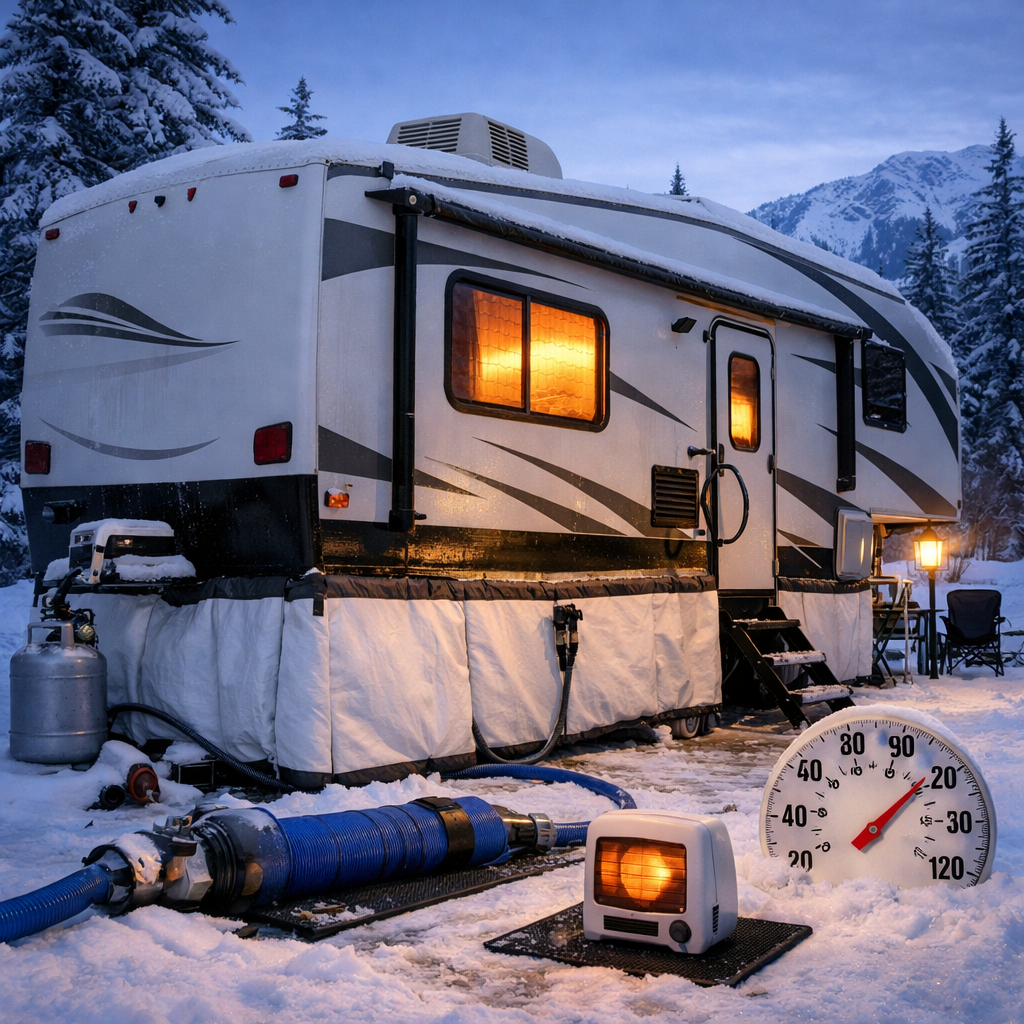
Winter RVing can be peaceful, quiet, and downright beautiful — but it can also turn expensive fast if you’re not prepared. Every winter, I get calls that start with, “It froze last night and now nothing works.” Most of those situations are preventable with a little planning and some realistic expectations.
Whether you’re full-time, part-time, or just riding out a cold snap, here’s what actually matters when wintering in your RV — from someone who fixes the aftermath.
Start With the Biggest Question: Are You Staying Put or Traveling?
How you winterize depends entirely on whether you’re stationary or moving.
Staying in one place: You’ll want insulation, skirting, and heat management.
Traveling through cold areas: You need freeze protection that can handle changing temperatures quickly.
This matters because what works for a parked RV in Texas does not work the same way in Colorado or the Midwest.
Protecting Your Water System (This Is Where Most Damage Happens)
Frozen plumbing is the most common and costly winter RV issue.
Fresh Water Hose
If you’re hooked up to city water:
Use a heated water hose
Add a pressure regulator (cold plastic fittings crack easily)
Insulate the spigot if possible
If you’re using your fresh tank:
Keep the water pump inside a heated area
Run the furnace regularly (not just space heaters)
Interior Plumbing
Open cabinet doors under sinks to allow warm air circulation
Let faucets drip during hard freezes
Know where your low-point drains are — just in case
If your RV has an enclosed underbelly, the furnace usually routes warm air down there. That’s helpful, but it only works if the furnace is running.
Furnace vs Space Heaters (This One’s Important)
Space heaters are great — as supplements.
But here’s the truth:
Your furnace protects your RV. Space heaters protect you.
The furnace:
Heats the underbelly
Protects tanks and valves
Keeps ducted systems from freezing
Space heaters:
Save propane
Keep living areas comfortable
The safest setup is using both, not choosing one over the other.
Skirting: Ugly but Effective
Skirting isn’t glamorous, but it works.
Even temporary skirting made from foam board or insulated vinyl can:
Reduce heat loss
Protect tanks and dump valves
Lower propane usage
Bonus tip: Keep vents clear. Trapping moisture under the RV causes just as many problems as cold.
Electrical Load Awareness
Winter puts extra demand on your electrical system.
Before running multiple heaters:
Know your amp limits
Avoid daisy-chaining extension cords
Check outlet heat (warm plugs are a warning sign)
Tripped breakers are annoying. Melted outlets are expensive.
Condensation Is the Silent Problem
Cold weather + warm interiors = moisture.
Unchecked condensation leads to:
Mold
Wood rot
Electrical issues
To reduce it:
Use roof vent fans occasionally
Crack a window when cooking or showering
Wipe windows and frames daily during cold spells
This part gets ignored — until it doesn’t.
When to Fully Winterize Instead
If temperatures will stay below freezing and you won’t be using the RV:
Drain the water system
Bypass the water heater
Add RV antifreeze
Trying to “half winterize” is how pipes split when you least expect it.
Final Technician Advice
Winter RV living is absolutely doable — but it rewards preparation and punishes shortcuts.
If you’re unsure:
Get your furnace checked before winter
Have seals, valves, and heaters inspected
Fix small issues before they become frozen disasters
Every winter repair I do costs more than the prep that would have prevented it. That’s not a sales pitch — it’s just the math.
If you plan ahead, winter RVing can be quiet, cozy, and stress-free. Skip the prep, and winter will remind you who’s in charge.
Stay warm, stay smart, and don’t ignore the forecast.